How Much Should CPG Branding & Packaging Actually Cost?
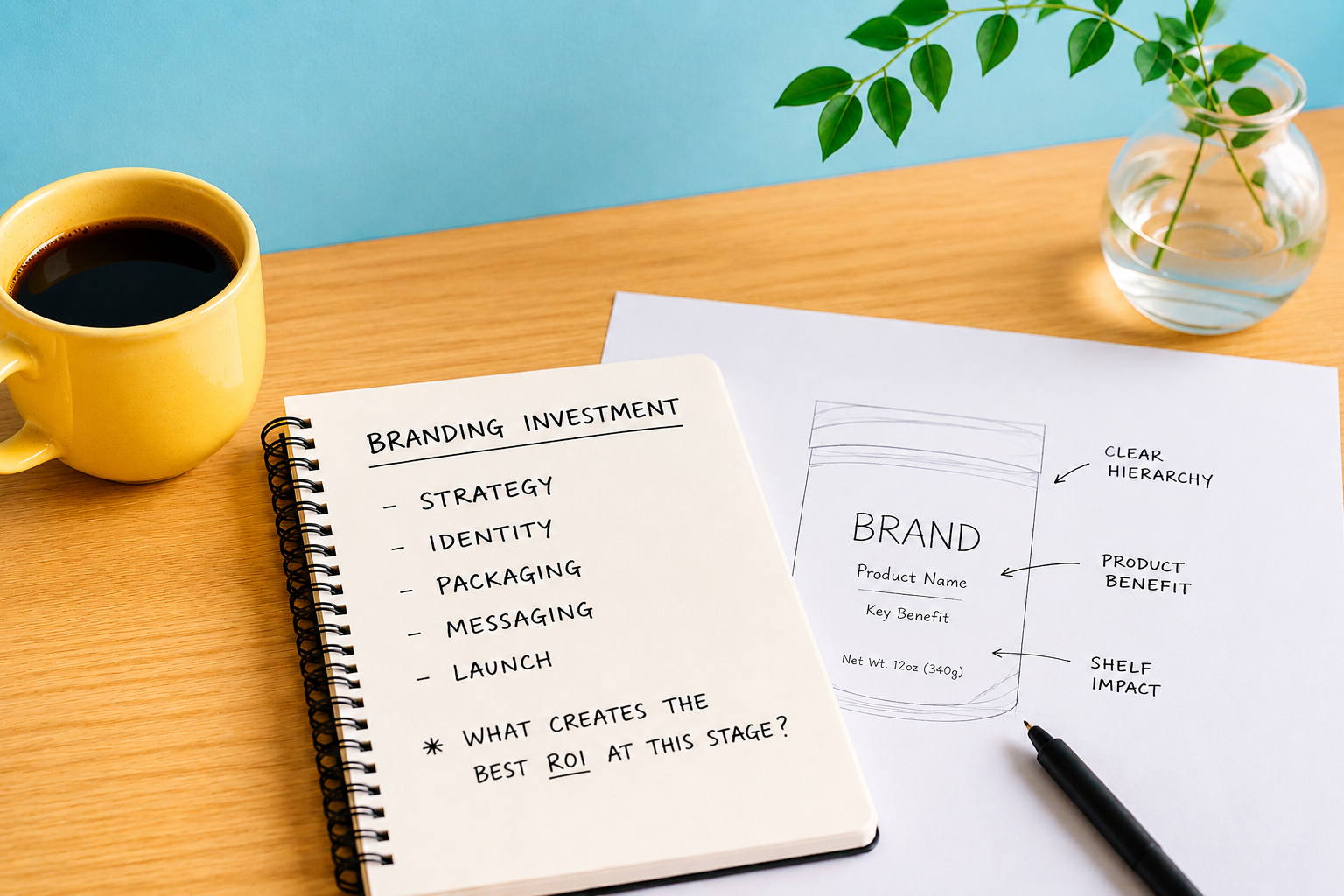
One of the most common questions I’ve been getting lately from CPG founders is:
“How much should I realistically invest into branding and packaging right now?”
And honestly, I think a lot of founders are confused about the pricing landscape in CPG.
Some founders assume every branding project costs $50K+.
Others think packaging design should only cost a few hundred dollars.
The reality is that there are different levels of investment depending on the stage of the brand, the goals of the business, and the complexity of the project.
A startup testing its first SKU is very different from an established brand preparing for retail expansion or a national rollout.
The right answer is not always “spend more.”
The better question is:
What level of design investment creates the best ROI for the current stage of the brand?
Why CPG Branding & Packaging Pricing Varies So Much
One reason founders get confused is because “branding and packaging” can mean completely different things depending on who they hire.
A global agency might charge $100K–$500K+ because they are handling deep research, strategy, consumer testing, packaging systems, rollout support, and stakeholder management across large teams.
A boutique CPG studio may focus more specifically on strategy, identity systems, multiple SKUs, and production coordination at a smaller scale.
A smaller specialized studio or freelancer may focus on solving packaging clarity, hierarchy, messaging, and shelf communication challenges with a leaner structure and lower overhead.
None of these approaches are automatically “better.”
They simply solve different problems.
Not Every Early-Stage CPG Brand Needs A Massive Design Investment
This is the part I think founders need to hear more often.
Not every brand needs to jump straight into a massive identity and packaging system right away.
Sometimes the smarter move is starting with:
A clear logo
A strong visual foundation
A defined target audience
Packaging that communicates clearly enough to test in the market
At the early stage, learning matters.
You are still figuring out:
how customers respond
what messaging resonates
what product benefits matter most
what shoppers actually notice first
Sometimes a leaner approach creates more flexibility to learn and improve over time.
When Investing More Upfront Makes Sense
On the other hand, there are situations where investing more upfront can absolutely save money long term.
Especially when a brand already has:
strong positioning
investor backing
retail distribution goals
multiple SKUs
a clear long-term vision
At that stage, stronger systems become more important.
Because redesigning later can become expensive.
New dielines.
New production files.
Updated photography.
Retail coordination.
Website updates.
Amazon updates.
Marketing changes.
Things scale quickly once a brand starts growing.
This is why some brands choose to build more strategically from the beginning instead of constantly patching things together later.
The Biggest Packaging Mistake I See
A lot of founders think the goal is making packaging look “cool.”
But most packaging succeeds or fails based on communication.
Can the shopper quickly understand:
what the product is
why it’s different
who it’s for
and why they should care
Especially in retail.
Most shoppers are making decisions in seconds.
That’s why packaging clarity, hierarchy, product recognition, and shelf read matter so much.
Sometimes small adjustments to hierarchy or messaging can improve packaging more than a complete redesign.
So How Much Should CPG Branding & Packaging Cost?
There is no universal answer.
But generally:
smaller early-stage projects may focus on clarity and launch readiness
mid-level projects often focus on stronger systems and SKU expansion
larger projects usually involve deeper strategy, testing, rollout coordination, and long-term scalability
The best investment is usually the one that matches the actual stage of the business.
Not the one that looks the most impressive on paper.
Final Thoughts
Good packaging is not about spending the most money possible.
It’s about creating a system that helps the product communicate clearly, compete effectively, and grow with the business.
Sometimes that means starting lean and learning.
Sometimes that means investing heavily upfront.
The important part is understanding why the investment exists in the first place and making sure the design work is actually helping the brand move forward.